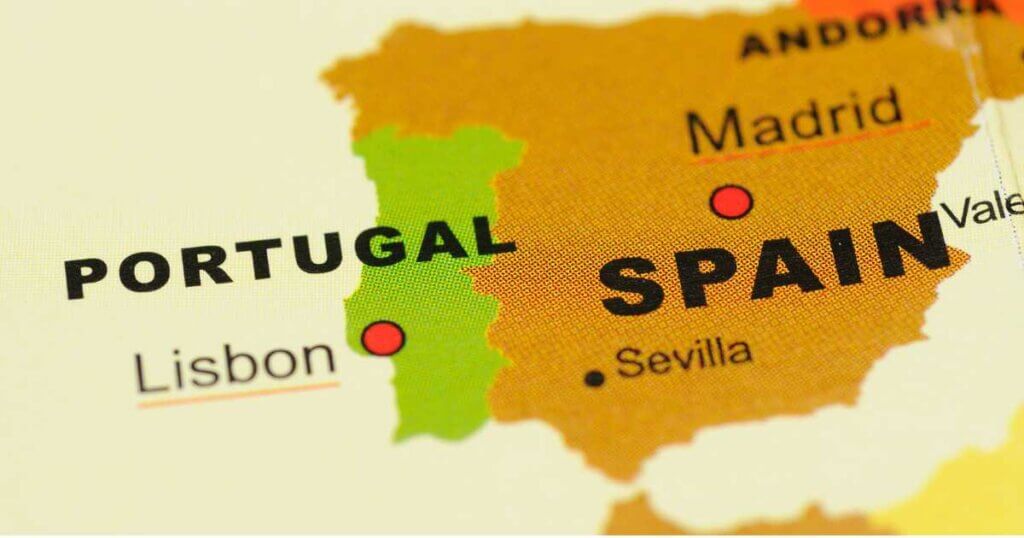
So you’ve narrowed your European trip down to two countries — Portugal and Spain. Both are on the Iberian Peninsula, both have incredible food, sunshine, and history, and both are a manageable flight from the US. But they are not the same place, and the right choice depends entirely on what kind of traveler you are.
This guide cuts through the confusion with real, side-by-side comparisons across the things that actually matter: daily costs, safety, how easy it is to get around, and how far your English will take you. By the end, you’ll know exactly which country fits your trip better — or whether you can squeeze in both.
Quick Overview: Portugal vs Spain at a Glance
| Factor | Portugal | Spain | Key Difference |
|---|---|---|---|
| Daily Budget (Mid-Range) | €70–120 | €80–140 | Portugal 12–15% cheaper |
| Safety Index Rank (2024) | 7th globally | 31st globally | Portugal ranks significantly higher |
| English Proficiency | Moderate (32% population) | Moderate (27% population) | Similar in tourist areas |
| Public Transport Coverage | Strong in cities, limited rural | Extensive national network | Spain has broader coverage |
| Geographic Size | 92,090 km² | 505,990 km² | Spain is 5.5x larger |
| International Airports | 4 major hubs | 46 airports | Spain offers more entry points |
| Annual Tourists | 27 million | 85 million | Spain gets 3x more visitors |
Cost Comparison: Where Does Your Money Go Further?
Portugal is consistently cheaper than Spain — not dramatically so, but enough to make a real difference over a week or two. Here’s the honest breakdown.
Accommodation Costs
Budget Hostels (Dormitory Beds, per night):
| City | Portugal | Spain | Difference |
|---|---|---|---|
| Capital City | Lisbon: €18–30 | Madrid: €22–35 | Portugal 15–20% lower |
| Second City | Porto: €15–28 | Barcelona: €25–40 | Portugal 35–40% lower |
| Coastal Areas | Algarve: €20–35 | Costa del Sol: €25–42 | Portugal 20–25% lower |
| Interior Cities | Évora: €12–22 | Salamanca: €15–25 | Portugal 15–20% lower |
Mid-Range Hotels (3-Star, Double Room, per night):
| City | Portugal | Spain | Difference |
|---|---|---|---|
| Capital City | Lisbon: €55–95 | Madrid: €70–110 | Portugal 20–25% lower |
| Second City | Porto: €50–85 | Barcelona: €80–130 | Portugal 35–40% lower |
| Coastal Areas | Algarve: €60–100 | Costa del Sol: €75–120 | Portugal 20–25% lower |
The Porto vs Barcelona gap is the most striking — Porto is genuinely 35–40% cheaper for the same standard of accommodation. That’s a significant saving for a week-long trip.
If you want a deeper look at what accommodation costs across different regions of Portugal, see our full guide: Ultimate Portugal Trip Cost 2026 Guide: Real Prices Revealed
Food and Drink Costs
Restaurant Meals:
| Item | Portugal | Spain | Difference |
|---|---|---|---|
| Lunch Menu (Menu do Dia) | €8–13 | €10–15 | Portugal 15–20% lower |
| Mid-Range Dinner (per person) | €13–20 | €15–22 | Portugal 18–20% lower |
| Coffee (espresso) | €0.80–1.20 | €1.20–1.80 | Portugal 30–35% lower |
| Beer (0.3L draft) | €1.50–2.50 | €2.50–3.50 | Portugal 30–40% lower |
| Glass of Wine | €2.00–4.00 | €3.00–5.00 | Portugal 25–30% lower |
Coffee is where the difference really stands out. At €0.80–1.20 per espresso, Portugal is one of the cheapest places in Europe for your daily caffeine fix.
Supermarket Staples:
| Item | Portugal | Spain | Difference |
|---|---|---|---|
| Bread (loaf) | €0.90–1.50 | €1.00–1.80 | Portugal 10–15% lower |
| Milk (1L) | €0.70–1.00 | €0.80–1.20 | Portugal 10–15% lower |
| Eggs (12) | €2.00–3.00 | €2.20–3.50 | Portugal 10–15% lower |
| Local Cheese (1kg) | €7.00–12.00 | €8.00–14.00 | Portugal 12–15% lower |
Transport Costs
Urban Public Transport:
| City | Single Ticket | 24-Hour Pass | Monthly Pass |
|---|---|---|---|
| Lisbon | €1.70 | €6.80 | €40.00 |
| Porto | €1.50 | €7.00 | €40.00 |
| Madrid | €1.50–2.00 | €8.40 | €54.60 |
| Barcelona | €2.55 | €11.35 | €40.00 |
Inter-City Travel:
| Route | Portugal Cost | Spain Cost | Journey Time |
|---|---|---|---|
| Capital to Second City | Lisbon–Porto: €25–35 | Madrid–Barcelona: €40–75 | 3h / 2.5–3h |
| Capital to South Coast | Lisbon–Faro: €20–25 | Madrid–Málaga: €35–60 | 4h bus / 2.5h train |
| Regional Train (100km) | €8–15 | €12–20 | Similar |
Car Rental (Compact, Per Day):
- Portugal: €25–45
- Spain: €30–50
- Fuel (per liter): Portugal €1.75–2.10 / Spain €1.55–1.65
Spain has slightly cheaper fuel but higher rental rates. Portugal is easier to navigate because of its smaller size — which matters a lot when you’re behind the wheel in an unfamiliar country.
For everything you need to know about getting around Portugal without a car, read: Explore Portugal Without a Car: 10 Scenic Itineraries by Train & Bus
Total Daily Budget Summary
| Travel Style | Portugal (€/day) | Spain (€/day) | You Save in Portugal |
|---|---|---|---|
| Budget | €40–60 | €50–70 | 15–20% |
| Mid-Range | €70–120 | €80–140 | 12–18% |
| Comfortable | €150–250 | €170–280 | 10–15% |
Safety Comparison: Which Country Is Safer?
This is one of the clearest differences between the two countries — and it matters especially for solo travelers and first-timers.
Global Safety Rankings
Global Peace Index 2024:
- Portugal: 7th globally (score: 1.333)
- Spain: 31st globally (score: 1.569)
Portugal has ranked in the global top 10 for safety consistently since 2014. That’s not a fluke — it reflects genuinely lower crime rates across the board.
Crime Statistics
Violent Crime Rate (per 1,000 residents):
- Portugal: 0.74
- Spain: 0.95 — Portugal is 22% lower
Tourist-Targeted Crime (incidents per 100,000 tourists):
| Crime Type | Portugal | Spain |
|---|---|---|
| Pickpocketing | 45–60 incidents | 120–150 incidents |
| Theft from Vehicle | 30–40 incidents | 55–70 incidents |
| Tourist Scams | 15–25 incidents | 40–60 incidents |
Barcelona and Madrid in particular report significantly higher tourist-targeted crime than Lisbon and Porto. If you’ve ever been warned about pickpockets in Europe, those warnings are much more relevant in Spain than in Portugal.
High-Risk Areas to Know About
Portugal:
- Lisbon: Martim Moniz area, late-night Bairro Alto
- Porto: São Bento station surroundings after dark
- Incidents are primarily opportunistic pickpocketing
Spain:
- Barcelona: Las Ramblas, metro system, beach areas
- Madrid: Gran Vía, Puerta del Sol, metro stations
- Valencia: Beach promenades, old town at night
- Incidents include organized pickpocket groups using distraction techniques — a step up in sophistication
Emergency Services
Average Urban Response Time:
- Portugal: 8–12 minutes
- Spain: 10–15 minutes
Both countries use the standard EU emergency number 112, with English-speaking operators. Both have dedicated tourist police in major cities.
Healthcare Quality (WHO Rankings):
- Portugal: 32nd globally
- Spain: 7th globally
Spain’s healthcare system is significantly better ranked. For travelers with pre-existing health conditions, this is worth factoring in.
Language: How Far Does English Get You?
EF English Proficiency Index:
- Portugal: 60.65 (Moderate)
- Spain: 57.51 (Moderate)
In practice, both countries are similar in tourist areas. The bigger practical difference is pronunciation — Spanish is phonetic (words sound like they’re spelled), while Portuguese has nasal vowels and sounds quite different from how it reads. If you’re trying to pick up a few local phrases, Spanish is easier for English speakers.
English in Tourist Areas:
| Location | Portugal | Spain |
|---|---|---|
| Capital City Tourist Center | 70–80% of staff | 65–75% of staff |
| Coastal Resort Areas | 75–85% of staff | 70–80% of staff |
| Museums / Major Attractions | 80–90% (signage + audio) | 80–90% (signage + audio) |
English Outside Tourist Areas:
| Location | Portugal | Spain |
|---|---|---|
| Neighbourhood Restaurants | 30–40% of staff | 35–45% of staff |
| Small Towns / Villages | 20–30% of residents | 25–35% of residents |
One important note: Portuguese speakers generally understand Spanish better than Spanish speakers understand Portuguese. So if you speak Spanish and visit Portugal, locals will often understand you — but you may struggle to follow their reply.
Transport Infrastructure: Getting Around Each Country
This is where Spain pulls ahead significantly.
Rail Networks
Portugal:
- Alfa Pendular high-speed train covers the main Lisbon–Porto corridor (3 hours)
- Limited frequency to smaller towns (2–4 trains daily)
- Some rural areas have no rail service at all
Spain:
- AVE high-speed network: 3,400+ km of track
- Madrid–Barcelona: 2.5 hours
- Madrid–Seville: 2.5 hours
- Madrid–Valencia: 1.5 hours
- 6–12 daily train frequencies to secondary cities
For getting between major destinations, Spain’s rail network is genuinely world-class. Portugal’s is adequate for the main tourist circuit but shows its limitations once you go off the beaten path.
Airport Connectivity
Portugal: 4 major hubs (Lisbon, Porto, Faro, Funchal) Spain: 46 airports including Madrid (61M passengers/year) and Barcelona (52M passengers/year)
If you’re flying from a smaller US city, Spain almost certainly has more direct or better-connected flight options. Portugal’s entry points are more limited.
Urban Metro Systems
| City | Lines | Stations | Annual Passengers |
|---|---|---|---|
| Lisbon | 4 | 56 | 173 million |
| Porto | 6 | 81 | 63 million |
| Madrid | 12 | 302 | 657 million |
| Barcelona | 12 | 180 | 411 million |
Spain simply has more infrastructure. That said, for the Portugal tourist circuit — Lisbon, Porto, Sintra, Algarve — the existing public transport is perfectly adequate.
Bus Networks
Portugal: Rede Expressos connects major cities and the Algarve. 3–6 departures daily on main routes. Spain: Multiple operators, 8–15 departures daily on main routes, superior rural coverage.
For rural destinations, Spain wins clearly. In Portugal, some inland villages essentially require a rental car. See our guide on Renting a Car in Portugal: Requirements, Costs, and Pitfalls if you’re considering driving.
Driving Comparison
Road Quality: Both countries have modern, well-maintained highway networks with toll roads on major routes.
Navigation Complexity:
- Portugal: Smaller country, easier to navigate, compact tourism areas
- Spain: Larger distances between regions require more planning
Parking (City Centres, Per Hour):
- Portugal: €1.50–3.00
- Spain: €2.00–4.00
Accessing Secondary Destinations
From Portugal:
- Évora (Alentejo): Bus from Lisbon, 1.5 hours, 4–6 daily departures
- Coimbra: Train from Lisbon/Porto, 1.5–2 hours, 12+ daily departures
- Óbidos: Bus from Lisbon, 1 hour, 6–8 daily departures
- Monsanto: Requires rental car or organised tour
From Spain:
- Toledo: Train from Madrid, 30 minutes, 20+ daily departures
- Segovia: Train from Madrid, 30 minutes, 15+ daily departures
- Granada: Train from Madrid/Barcelona, 3–4 hours, 8+ daily departures
- Ronda: Train/bus from Málaga, 2 hours, 10+ daily departures
Spain’s broader rail network makes day trips to secondary cities much easier and more spontaneous.
For a full Portugal itinerary that works entirely by public transport, check out: Portugal 8–10 Days Itinerary: Lisbon, Porto & Day Trips Using Only Public Transport
Seasonal Differences
Summer (June–August)
Portugal: Coastal temperatures 24–29°C, interior can exceed 35°C. Peak pricing and crowds, but still manageable compared to Spain.
Spain: Mediterranean coast 28–32°C, interior frequently exceeds 38°C. More tourists in absolute numbers, but the country’s larger size spreads the crowds more.
Verdict: Portugal offers slightly cooler coastal temperatures and feels less overwhelmed in summer.
Winter (December–February)
Portugal: Mild winters, 14–16°C in the south and Lisbon area. Budget-friendly pricing. Perfect for city tourism.
Spain: Varies hugely by region. Mediterranean coast is mild (15–18°C). Interior and north can be cold (5–10°C). Canary Islands warm year-round (20–22°C).
Verdict: Portugal has more consistent mild winter conditions. Spain offers more options (including warm island escapes).
For detailed month-by-month guidance on Portugal, see: Best Time to Visit Portugal: Weather, Price, and Crowd Data by Month
Can You Visit Both?
Absolutely — and it’s easier than most people think.
Both countries are in the Schengen zone, so there are no border controls. The distances are short:
- Lisbon to Seville: 315 km, 3–4 hour drive or direct bus
- Porto to Santiago de Compostela: 230 km, 3 hour drive or direct bus
- Faro to Seville: Direct bus, 3 hours, around €20–30
Bus options between countries:
- Lisbon to Seville: Direct bus, 6–7 hours, €25–40
- Lisbon to Madrid: Direct bus, 7–8 hours, €30–50
Flight options:
- Multiple daily flights between Lisbon/Porto and Madrid/Barcelona
- Flight time: 1–1.5 hours
- Cost: €40–120 depending on how far in advance you book
Common combined itineraries:
- Lisbon (3–4 days) + Seville (2–3 days) + Granada (2 days)
- Porto (3 days) + Santiago de Compostela (2 days)
- Algarve (4–5 days) + Andalusia (4–5 days)
For travelers with 2+ weeks, combining both countries is a genuinely great option.
Common Misconceptions Worth Clearing Up
“Portugal and Spain are basically the same.” They’re neighbours, not twins. Portugal has its own language, its own culinary traditions (bacalhau, pastel de nata), its own architectural style (Manueline), and has been an independent country since 1143. Travelers expecting interchangeable experiences are always surprised.
“My Spanish will work fine in Portugal.” Written Spanish and Portuguese share similarities, but spoken Portuguese sounds completely different. Spanish speakers typically understand only 30–40% of spoken Portuguese without prior exposure. Don’t rely on Spanish in Portugal — learn a few Portuguese phrases instead.
“Spain has better weather everywhere.” Not true. Southern Portugal (the Algarve) has warmer winters than most of Spain. Northern Spain (Galicia, the Basque Country) is cooler and wetter than most of Portugal. Weather advantage depends entirely on which specific regions you’re comparing.
“Portugal is just a cheaper version of Spain.” Portugal isn’t a discount Spain — it’s a completely different destination with its own identity, its own food culture, its own music (fado), and attractions you simply won’t find anywhere in Spain. It deserves to be evaluated on its own terms.
Who Should Choose Portugal
Choose Portugal if:
- Budget is a priority — 12–18% lower daily costs across the board, with Porto especially cheap vs Barcelona
- You have 1 week or less — Portugal’s compact size means less transit time and easier coverage
- Safety matters to you — significantly higher global peace ranking and lower tourist-targeted crime
- You want fewer crowds — 27 million annual visitors vs Spain’s 85 million
- It’s your first international trip — smaller scale, easier to navigate, lower complexity
For what to expect cost-wise, read: Ultimate Portugal Trip Cost 2026 Guide For where to go in Portugal, read: Portugal Travel Guide for First Time Visitors
Who Should Choose Spain
Choose Spain if:
- Transport infrastructure is a priority — AVE high-speed rail is exceptional, 46 airports
- You have 2+ weeks and want regional variety — Catalonia, Andalusia, Basque Country, Galicia are each dramatically different
- Language ease matters — Spanish pronunciation is more accessible for English speakers
- Healthcare is a concern — Spain’s system ranks 7th globally vs Portugal’s 32nd
- Art and architecture is your focus — Prado, Guggenheim Bilbao, Gaudí in Barcelona
Budget Decision Guide
Under €60/day: Portugal is the clear choice. Achievable with guesthouse accommodation and local eating. Spain at this budget requires very careful management.
€70–120/day: Both countries work well. Portugal gives you more flexibility and dining freedom at this range.
€150+/day: Both work comfortably. The price difference becomes less important — focus on which experiences you want instead.
Transport Preference Guide
Prefer public transport: Spain wins for reaching secondary destinations. Portugal is perfectly adequate for the main Lisbon–Porto–Algarve circuit.
Planning to rent a car: Portugal is easier to navigate. See: Driving in Portugal: Complete Guide to Tolls, Via Verde, Insurance & Road Rules
Prefer walkable city exploration: Both countries have excellent walkable historic centres. Portugal’s cities (Lisbon, Porto) are more compact overall.
Trip Length Guide
1 week or less: Portugal — compact geography, less time lost in transit, full country accessible 2 weeks: Either country works well independently, or combine both 3+ weeks: Spain’s greater regional diversity rewards extended stays, or do a proper combination of both
FAQs — Portugal vs Spain for Tourists
Is Portugal cheaper than Spain? Yes, consistently. Daily costs in Portugal run 12–18% lower across accommodation, food, and activities. The gap is largest in accommodation, especially when comparing Porto to Barcelona.
Is Portugal safer than Spain? Yes. Portugal ranks 7th globally on the Global Peace Index; Spain ranks 31st. Portugal also has significantly lower rates of tourist-targeted crime like pickpocketing and scams.
Which country is easier to get around? Spain has the superior transport network — more airports, better high-speed rail, more bus frequency. Portugal is easier to navigate because of its smaller size, and public transport covers the main tourist circuit well.
Can I visit both Portugal and Spain in one trip? Yes. With 2+ weeks it’s very manageable. Common routes include Lisbon + Seville + Andalusia, or Porto + Santiago de Compostela. Direct buses connect the main cities.
Which country is better for first-time travelers to Europe? Portugal tends to be the better starting point — smaller scale, lower crime, easier navigation, and slightly better English proficiency in tourist areas.
Conclusion
Portugal and Spain are both excellent destinations — but they’re excellent in different ways. Portugal wins on cost, safety, simplicity, and crowd levels. Spain wins on transport infrastructure, regional variety, flight connectivity, and sheer scale of options.
If you’re working with a tight budget, traveling for a week, going solo, or visiting Europe for the first time — Portugal is the stronger choice. If you have two weeks or more, want Spain’s extraordinary rail network, or crave the kind of regional diversity that takes a lifetime to fully explore — Spain earns its place.
And if you can manage it, visit both. They sit side by side on the map for a reason, and a week in each gives you a genuinely complete picture of what the Iberian Peninsula has to offer.
Ready to plan your Portugal trip? Start here:
Is Portugal Safe for Tourists? Crime, Scams and Real Risks
Portugal Travel Guide for First Time Visitors