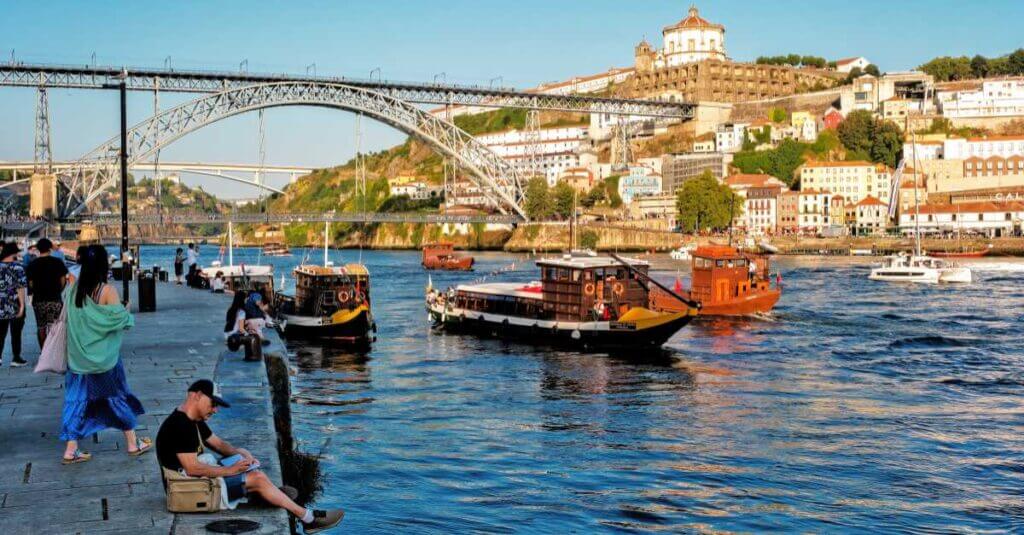
Picking the right time to visit Portugal can make the difference between a relaxed, affordable trip and one where you’re sweating through 35-degree heat while queuing 90 minutes to enter a palace. The honest answer is that Portugal is a good destination almost any time of year — but each month brings a different trade-off between weather, cost, and how many other tourists you’ll be sharing it with.
This guide breaks it all down month by month with real temperature data, actual accommodation price ranges, and crowd levels so you can make the decision that fits your trip, not just a generic “go in shoulder season” recommendation. Whether you’re after summer beaches, spring wildflowers, harvest season in the Douro Valley, or a quiet city break in winter — there’s a right time for you, and this guide will help you find it.
Quick Overview: Every Month at a Glance
| Month | Weather | Price Level | Crowd Level | Best For |
|---|---|---|---|---|
| January | Cool / Wet | Lowest | Minimal | Budget travel, city exploration |
| February | Cool / Wet | Lowest | Minimal | Museums, indoor activities |
| March | Mild | Low | Low–Moderate | Early spring, fewer crowds |
| April | Mild / Warm | Moderate | Moderate | Outdoor activities, good balance |
| May | Warm | Moderate–High | Moderate–High | Pre-summer, festivals |
| June | Hot | High | High | Beach season start, long days |
| July | Very Hot | Highest | Highest | Peak beach season |
| August | Very Hot | Highest | Highest | Peak summer, busiest month |
| September | Warm | High | High | Late summer, warmest sea |
| October | Mild / Warm | Moderate | Moderate | Harvest season, great balance |
| November | Cool / Wet | Low | Low | Off-season prices, few tourists |
| December | Cool / Wet | Low–Moderate | Low–Moderate | Christmas markets, city breaks |
Climate Data by Region
Portugal is a small country, but the weather varies quite a bit depending on where you are. Here’s the real data for each major region.
Lisbon Region
| Month | Avg High | Avg Low | Rain Days | Ocean Temp |
|---|---|---|---|---|
| January | 15°C / 59°F | 8°C / 46°F | 15 | 15°C / 59°F |
| February | 16°C / 61°F | 9°C / 48°F | 14 | 14°C / 57°F |
| March | 18°C / 64°F | 10°C / 50°F | 12 | 15°C / 59°F |
| April | 20°C / 68°F | 12°C / 54°F | 13 | 16°C / 61°F |
| May | 23°C / 73°F | 14°C / 57°F | 10 | 17°C / 63°F |
| June | 27°C / 81°F | 17°C / 63°F | 5 | 18°C / 64°F |
| July | 29°C / 84°F | 18°C / 64°F | 2 | 19°C / 66°F |
| August | 29°C / 84°F | 18°C / 64°F | 2 | 20°C / 68°F |
| September | 27°C / 81°F | 17°C / 63°F | 6 | 20°C / 68°F |
| October | 22°C / 72°F | 14°C / 57°F | 11 | 19°C / 66°F |
| November | 18°C / 64°F | 11°C / 52°F | 14 | 17°C / 63°F |
| December | 15°C / 59°F | 9°C / 48°F | 15 | 16°C / 61°F |
Porto and Northern Region
| Month | Avg High | Avg Low | Rain Days | Rainfall (mm) |
|---|---|---|---|---|
| January | 14°C / 57°F | 5°C / 41°F | 17 | 158mm |
| February | 15°C / 59°F | 6°C / 43°F | 15 | 140mm |
| March | 17°C / 63°F | 7°C / 45°F | 14 | 90mm |
| April | 18°C / 64°F | 9°C / 48°F | 15 | 116mm |
| May | 20°C / 68°F | 11°C / 52°F | 14 | 98mm |
| June | 24°C / 75°F | 14°C / 57°F | 8 | 46mm |
| July | 25°C / 77°F | 15°C / 59°F | 5 | 20mm |
| August | 26°C / 79°F | 15°C / 59°F | 5 | 35mm |
| September | 24°C / 75°F | 14°C / 57°F | 9 | 82mm |
| October | 20°C / 68°F | 12°C / 54°F | 15 | 162mm |
| November | 16°C / 61°F | 8°C / 46°F | 17 | 160mm |
| December | 14°C / 57°F | 6°C / 43°F | 17 | 195mm |
Porto is noticeably wetter than Lisbon — December alone averages 195mm of rain. If you’re visiting the north, factor this into your packing and activity planning.
Algarve Region
| Month | Avg High | Avg Low | Rain Days | Ocean Temp |
|---|---|---|---|---|
| January | 16°C / 61°F | 8°C / 46°F | 11 | 16°C / 61°F |
| February | 17°C / 63°F | 9°C / 48°F | 10 | 15°C / 59°F |
| March | 19°C / 66°F | 10°C / 50°F | 8 | 16°C / 61°F |
| April | 20°C / 68°F | 12°C / 54°F | 9 | 17°C / 63°F |
| May | 23°C / 73°F | 14°C / 57°F | 6 | 18°C / 64°F |
| June | 26°C / 79°F | 17°C / 63°F | 2 | 20°C / 68°F |
| July | 29°C / 84°F | 19°C / 66°F | 1 | 21°C / 70°F |
| August | 29°C / 84°F | 19°C / 66°F | 1 | 22°C / 72°F |
| September | 27°C / 81°F | 18°C / 64°F | 4 | 22°C / 72°F |
| October | 23°C / 73°F | 15°C / 59°F | 9 | 21°C / 70°F |
| November | 19°C / 66°F | 11°C / 52°F | 11 | 19°C / 66°F |
| December | 16°C / 61°F | 9°C / 48°F | 12 | 17°C / 63°F |
The Algarve has the mildest winters in Portugal — even January averages 16°C highs, which is why it attracts winter visitors from across northern Europe.
Interior Regions (Alentejo, Beiras)
The interior of Portugal is a different story from the coast. Alentejo plains regularly hit 35–40°C in July and August — uncomfortably hot for sightseeing. Winter lows in the Serra da Estrela mountains can drop to -5°C with snow cover from December to February. If you’re heading inland in summer, plan your activities for early morning or late evening.
Accommodation Prices by Month
These are average 3-star hotel prices for a double room. Useful for planning your budget before you book.
Lisbon
| Month | Avg Price Per Night | Compared to Annual Average | How Far Ahead to Book |
|---|---|---|---|
| January | €58 | 35% below average | 1–2 weeks |
| February | €62 | 31% below average | 1–2 weeks |
| March | €72 | 20% below average | 2–3 weeks |
| April | €85 | 6% below average | 3–4 weeks |
| May | €95 | 6% above average | 4–6 weeks |
| June | €108 | 20% above average | 6–8 weeks |
| July | €125 | 39% above average | 8–10 weeks |
| August | €130 | 44% above average | 8–10 weeks |
| September | €110 | 22% above average | 6–8 weeks |
| October | €92 | 2% above average | 3–4 weeks |
| November | €68 | 24% below average | 2–3 weeks |
| December | €75 | 17% below average | 3–4 weeks |
Porto
| Month | Avg Price Per Night | Compared to Annual Average | How Far Ahead to Book |
|---|---|---|---|
| January | €52 | 33% below average | 1–2 weeks |
| February | €55 | 29% below average | 1–2 weeks |
| March | €65 | 16% below average | 2–3 weeks |
| April | €75 | 3% below average | 3–4 weeks |
| May | €88 | 14% above average | 4–6 weeks |
| June | €98 | 27% above average | 6–8 weeks |
| July | €112 | 45% above average | 8–10 weeks |
| August | €115 | 49% above average | 8–10 weeks |
| September | €102 | 32% above average | 6–8 weeks |
| October | €82 | 6% above average | 3–4 weeks |
| November | €62 | 20% below average | 2–3 weeks |
| December | €68 | 12% below average | 2–3 weeks |
Algarve Coastal Areas
| Month | Avg Price Per Night | Compared to Annual Average | Note |
|---|---|---|---|
| January | €48 | 52% below average | Many properties closed |
| February | €50 | 50% below average | Limited services open |
| March | €65 | 35% below average | Pre-season reopening |
| April | €82 | 18% below average | Shoulder season |
| May | €95 | 5% below average | Early season |
| June | €120 | 20% above average | High season starts |
| July | €145 | 45% above average | Peak season |
| August | €155 | 55% above average | Busiest and most expensive |
| September | €125 | 25% above average | Still high season |
| October | €90 | 10% below average | Late season |
| November | €58 | 42% below average | Many properties closing |
| December | €55 | 45% below average | Off-season |
For a full breakdown of what your daily budget looks like in Portugal, see: Ultimate Portugal Trip Cost 2026 Guide
Visitor Crowds by Month
Based on airport arrivals and accommodation occupancy data from the Instituto Nacional de Estatística (INE).
| Month | Share of Annual Visitors | Occupancy Rate | Wait Times at Major Sites |
|---|---|---|---|
| January | 4.2% | 42% | Minimal (0–10 min) |
| February | 4.8% | 45% | Minimal (0–10 min) |
| March | 6.5% | 58% | Low (10–20 min) |
| April | 8.2% | 68% | Moderate (20–30 min) |
| May | 9.8% | 76% | Moderate (30–45 min) |
| June | 10.5% | 82% | High (45–60 min) |
| July | 12.1% | 91% | Very High (60–90 min) |
| August | 13.8% | 94% | Very High (90+ min) |
| September | 10.9% | 85% | High (45–75 min) |
| October | 9.1% | 72% | Moderate (30–45 min) |
| November | 5.6% | 52% | Low (10–20 min) |
| December | 4.5% | 48% | Minimal (0–15 min) |
Practical tip for peak season: Buying tickets in advance cuts wait times by 40–60% at timed-entry sites like Pena Palace and Jerónimos Monastery. Visiting before 10am or after 4pm also reduces crowd density by 30–50%.
Month-by-Month Guide
January & February — Deep Off-Season
The quietest and cheapest months in Portugal. Accommodation runs 30–35% below annual average, and you’ll have major sites almost entirely to yourself. The downside is real — 14–17 rainy days per month in Lisbon and Porto, cool temperatures, and shorter daylight hours (sunset around 5:30pm).
In the Algarve, 30–40% of coastal restaurants and beach services are closed. Ferry services to the Berlengas Islands are suspended. That said, indoor attractions — museums, galleries, wine cellars, restaurants — all run full schedules.
Best for: Budget travelers, museum lovers, people who want Lisbon or Porto without the crowds. Not ideal for: Beach trips, hiking in the north, anyone needing consistent sunshine.
March — Early Spring
March is when Portugal starts to wake up. Temperatures climb to 17–19°C, rainfall begins to ease, and the Algarve interior sees its famous almond blossoms. Prices are still 15–20% below annual average, crowds are light, and most seasonal services start reopening.
One thing to watch: if Easter falls in March, expect temporary price spikes of 25–40% around that week in popular areas. Always check the Easter date for your year before booking.
Best for: Early spring travellers who want lower prices and no queues. Watch out for: Easter week price increases.
April — The Sweet Spot
April is genuinely one of the best months to visit Portugal. Temperatures are mild (18–20°C), wildflowers are blooming across the Alentejo and western Algarve, crowds are manageable, and prices are within 10% of the annual average — not cheap, but not peak either.
Ocean temperatures (16–17°C) are still a bit cool for swimming, but for sightseeing, city walks, and day trips, the conditions are close to perfect.
Festivals in April:
- Semana Santa (Holy Week): Religious processions in Braga — genuinely atmospheric
- Queima das Fitas (late April/early May): Student festival in Coimbra
- Flower Festival throughout April in Funchal, Madeira
Best for: First-time visitors, couples, outdoor sightseers, anyone wanting a good all-round experience.
For what to see across Portugal in spring, read: Portugal Travel Guide for First Time Visitors
May — Excellent but Getting Busier
May brings warm temperatures (20–23°C), long evenings (sunset after 8pm), and ocean temperatures reaching 17–18°C. It’s one of the most popular months for a reason — the weather is excellent and the full peak chaos of July/August hasn’t arrived yet.
The catch: accommodation prices are already 5–15% above annual average, and you’ll need to book 4–6 weeks ahead for good properties. Major sites show 30–45 minute queues.
Best for: Travelers who want summer warmth without summer prices and crowds. A strong choice for families. See: Family Road Trip Portugal for Americans
June — High Season Begins
June is hot (24–27°C), almost completely dry in the south, and packed with festivals. Ocean temperatures reach 18–20°C — comfortable for swimming in the Algarve. Prices are 20–27% above average and climbing.
June festivals worth knowing:
- Santo António (June 12–13): Lisbon’s biggest street festival — entire neighbourhoods celebrate
- São João (June 23–24): Porto’s most important festival with overnight celebrations in the streets
- Medieval Fair in Óbidos throughout the month
Book accommodation 6–8 weeks ahead minimum. If you want to experience these festivals, you’ll need to plan further in advance — hotels near central Lisbon and Porto fill up fast around these dates.
Best for: Festival lovers, beach travelers arriving before peak August prices.
July & August — Peak Season
The busiest and most expensive months in Portugal. Accommodation runs 40–50% above annual average. In the Algarve, minimum stay requirements of 3–7 nights are common. Booking 8–10 weeks ahead is the minimum — 12 weeks is safer.
What you get in return: maximum sunshine, ocean temperatures of 19–22°C, every service operating with extended hours, and Portugal at its most lively. Interior regions (Alentejo, upper Douro Valley) regularly exceed 35°C — outdoor sightseeing there needs to happen before midday or after 6pm.
The first two weeks of August see a surge in domestic tourism as Portuguese families take their holidays, pushing crowds higher still.
Best for: Beach holidays, travelers with no schedule flexibility. Heat warning: Stay hydrated (2–3 litres daily), use sun protection, and avoid prolonged outdoor activity between 11am and 4pm in interior regions.
September — The Insider’s Pick
September is the month that frequent Portugal visitors tend to recommend most. Temperatures are warm (24–27°C), the ocean is at its absolute warmest (20–22°C, the highest of the year), crowds drop 20% from August, and prices begin to fall.
It’s also harvest season. The Douro Valley vindima (grape harvest) runs from mid-September through early October — if wine tourism interests you, this is the best window. Vineyard access, harvest activities, and cellar tours are at their peak, though accommodation in wine regions books up fast. See: Affordable Wine Villages Douro Valley
Best for: Anyone who wants summer conditions without summer crowds. One of the strongest months overall.
October — Autumn Balance
October is the other great shoulder season month. Temperatures drop to 20–23°C — still warm enough for outdoor sightseeing — rainfall returns gradually, and prices fall to within 5–10% of the annual average. Queues at major sites are down to 30–45 minutes.
The Algarve begins to wind down — some beach services reduce hours and a few coastal restaurants close. The focus naturally shifts toward cultural visits, wine regions, and slower travel. This is also one of the best months for hiking across Portugal before winter rainfall sets in.
For great hiking options, see: Sintra Hidden Hiking Trails: 7 Secret Routes Beyond the Palaces
Best for: Hikers, cultural travellers, wine tourism, anyone wanting good weather at fair prices.
November — Quiet Off-Season
November brings the off-season back in full. Prices drop 20–25% below annual average, major sites have almost no queues, and you’ll feel like you have Portugal to yourself — especially midweek.
The trade-off is significant rainfall (especially in the north — Porto averages 160mm in November), shorter days, and a wind-down in coastal services. Outdoor activities and beach trips aren’t realistic. But for a city-focused trip to Lisbon or Porto, November is genuinely underrated.
Best for: Budget travelers, solo visitors, anyone who loves cities without the tourist masses.
December — City Breaks and Christmas Markets
December splits into two different experiences. Early December (before the 20th) gives you off-season prices (20–30% below average) with Christmas markets, festive decorations, and very manageable crowds. That middle section is genuinely lovely for a winter city break.
Christmas and New Year (December 21–January 2) is a different story — prices in cities spike 40–60%, and popular spots fill up. Funchal in Madeira is famous for its New Year’s fireworks and gets particularly busy. If you’re travelling over Christmas, book well in advance and expect to pay accordingly.
Porto’s December rainfall peaks at 195mm — pack accordingly if you’re heading north.
Best for: City breaks in early December, festive atmosphere, Christmas market lovers.
When to Visit By Travel Type
For Beach Holidays
Best: Late June through mid-September. Ocean is warm (20°C+), all beach services are running, and weather is reliable. Good: May in the Algarve (ocean 18°C, not yet crowded), early October in the south. Avoid: November through April for swimming. Northern beaches run 2–3°C cooler than the Algarve year-round.
For City Sightseeing (Lisbon & Porto)
Best: April (after Easter), October, early November. Good: March, May, September. Avoid: July and August in Lisbon — the heat and crowds make it genuinely exhausting.
For the best Lisbon and Porto experiences without a car, see: Explore Portugal Without a Car: 10 Scenic Itineraries by Train & Bus
For Hiking and Outdoor Activities
Best: April–May (mild, green, wildflowers) and September–October (comfortable temperatures, stable weather). Avoid: July–August in interior regions (dangerous heat). December–February in the north (excessive rainfall).
For outdoor adventures near Lisbon, see: Arrábida Natural Park Easy Hikes: Stunning Views for Every Traveler
For Wine Tourism (Douro Valley)
Harvest season: Mid-September through early October — the most atmospheric time with vineyards in full activity. Off-season advantage: November–March offers better availability for tastings and lower accommodation costs.
Read more: Affordable Wine Villages Douro Valley for Budget Travelers
For Budget Travel
Best: January 5 – February 15 and November 10 – December 15 (excluding Christmas week). Accommodation runs 50–60% below peak prices during these windows. Good: March and October for 25–35% savings with much better weather.
For Avoiding Crowds
Best: January and February — occupancy rates of 42–45%, minimal queues everywhere. Good: November, early March. Avoid: July, August, Easter week, Santo António (June 12–13), São João (June 23–24).
For Families with Children
Best: May–June or September. School holiday windows with good weather before or after the absolute peak. Practical note: If travelling in July or August, book everything 10–12 weeks ahead and buy attraction tickets in advance to skip queues.
Full family travel guide: Family Road Trip Portugal for Americans: 10 Hidden Towns
Regional Timing Guide
Lisbon and Surroundings
Best: April–June, September–October. Challenging: July–August (very hot urban temperatures, maximum crowds), December–February (frequent rain).
Porto and Douro Valley
Best: May (pleasant temperatures, lush green landscapes) and September (harvest season, warm, beautiful vineyards). Challenging: November–February (Portugal’s highest rainfall — 140–195mm monthly), July–August in the upper Douro (35–40°C).
For day trips from Porto: Best Small Towns Near Porto for Day Trips: Douro, Braga & Aveiro
Algarve
The Algarve has a longer season than the rest of Portugal — March through October is viable, with the core beach season running May through September.
Best: May–June (warm, not yet overcrowded) and September (warmest ocean, fewer tourists). Off-season: November–February sees 30–40% of beachfront establishments close.
For hidden spots in the Algarve: Hidden Villages in the Algarve: 9 Peaceful Towns Near Lagos & Sagres
Alentejo
Best: April–May (wildflower season, comfortable 20–25°C), October (post-harvest, cooler after summer heat). Avoid: July–August — temperatures frequently exceed 38°C (100°F). If you must visit in summer, limit outdoor activity to before 11am and after 6pm.
For the best Alentejo villages: Best Villages in Alentejo: Portugal’s Timeless Countryside Escapes
Common Timing Mistakes
Assuming summer is always the best time. Portugal’s heat — particularly inland — can make extensive outdoor sightseeing in July and August genuinely unpleasant. April–May and September–October deliver better conditions for actually seeing the country comfortably.
Underestimating off-season limitations. November through February closures in the Algarve are real. Seasonal tour operators, beach cave boats, water sports, and some rural accommodations simply shut down. Plan your activities accordingly.
Ignoring regional weather differences. Porto’s November rainfall (160mm) is a completely different experience from the Algarve’s (58mm). Don’t plan the same itinerary for both regions in the same week without checking the local forecast.
Booking too late for summer. June–August requires 6–8 weeks minimum advance booking. Travelers who leave it to 3–4 weeks out face limited availability and 30–50% price premiums on whatever’s left.
Missing local holiday impacts. Portugal’s public holidays and local festivals create accommodation shortages and price spikes. Santo António (June 12–13 in Lisbon) and São João (June 23–24 in Porto) both require planning 8–10 weeks ahead if you want to attend.
Quick Decision Guide
If budget is your top priority: Go in January, February, or early November. Accept the cooler, wetter weather in exchange for 50–60% savings on accommodation.
If weather is your top priority: June and September offer the best balance of heat, sunshine, and manageable conditions. July and August are hotter but also more crowded and expensive.
If avoiding crowds is your top priority: January and February are the clear winners — 42–45% hotel occupancy, almost no queues, and genuinely peaceful cities.
If you want the best overall balance: April (after Easter) and October are the two strongest all-round months. Good weather, fair prices, manageable crowds, and all major attractions fully open.
FAQs — Best Time to Visit Portugal
What is the cheapest month to visit Portugal? January and February are the cheapest months overall, with accommodation 30–35% below the annual average in Lisbon and Porto, and 50% below in the Algarve. Early November is a close third.
What is the best month for the Algarve? May or September. May gives you warm weather and open beaches before peak prices and crowds arrive. September gives you the warmest sea temperatures of the year (22°C) with noticeably fewer tourists than August.
Is Portugal good to visit in winter? Yes, for city trips — Lisbon and Porto in January or February are quiet, affordable, and still have plenty to offer culturally. The Algarve in winter is mild but has limited beach services. Avoid the north in winter if you dislike rain.
Is April a good time to visit Portugal? April is one of the best months to visit. Mild temperatures, spring flowers, manageable crowds, and prices that haven’t yet hit summer highs. Watch out for Easter week price spikes if relevant to your dates.
When is it too hot in Portugal? For most coastal areas, July and August are hot but manageable (29°C highs). In the interior — Alentejo and the upper Douro Valley — temperatures regularly exceed 38°C in July and August, making daytime outdoor activity genuinely uncomfortable.
Conclusion
There’s no single “best” month to visit Portugal — the right time depends entirely on what matters most to you. If it’s price, go in winter. If it’s beach and sunshine, go in June or September. If it’s a balanced experience with good weather and without the peak chaos, April and October are hard to beat.
What Portugal does well is offer something genuinely worthwhile in every season — whether that’s a sun-drenched week on the Algarve coast in August, a quiet wander through Porto’s rainy streets in November, or a wildflower-filled road trip through the Alentejo in April. The key is matching the month to your priorities, not just picking the most obvious time.
Ready to plan your trip? Here are the best next steps:
Budget Itinerary for Portugal: 7-Day Trip Through Small Towns
Portugal Travel Guide for First Time Visitors
Ultimate Portugal Trip Cost 2026 Guide