How much does a trip to Portugal really cost in 2026? That’s usually the very first question American travelers ask before they even look at flights or hotels — and for good reason. No one wants to fall in love with a destination and then discover it’s completely out of budget.
The good news is that Portugal is still one of the best-value countries in Western Europe. Yes, prices have risen slightly compared to 2024, but compared to France, Italy, Spain, or the UK, the cost of travel in Portugal remains genuinely affordable. You can still find a hearty sit-down lunch for under €13, a clean guesthouse for under €65, and travel between cities by train for less than €20.
This guide gives you honest, up-to-date numbers for 2026 — from breakfast and coffee to hotels by region, trains, car rental, and family costs. Whether you’re planning a solo trip, a couples’ getaway, or a full family holiday, you’ll find a realistic daily budget that fits your style.
By the end, you’ll be able to estimate your own Portugal trip cost for 2026 with confidence. No complicated formulas. No inflated numbers. Just real prices and simple guidance to help you plan your perfect trip.
Quick Estimate — How Much Does a Portugal Trip Cost in 2026?
Before diving into details, most planners just want a fast answer: “How much money should I bring for Portugal?” This quick snapshot gives you a realistic starting point based on common travel styles used by U.S. visitors. Think of it as a simple calculator in words.
These estimates include accommodation, meals, local transport inside Portugal, and basic activities. They do not include your international flight.
Budget Traveler (hostels, guesthouses, public transport, simple meals) Estimated daily cost: €60–€90 per person Ideal for: solo travelers, students, backpackers, ultra-budget explorers
Mid-Range Traveler (private hotel room, trains, restaurants) Estimated daily cost: €100–€165 per person Ideal for: couples, normal vacationers, comfort-focused solo travelers
Family Traveler (2 adults + 2 children, apartment or family room, mixed transport) Estimated daily cost: €200–€300 per family Ideal for: parents traveling with kids, space and comfort needed
Luxury Traveler (boutique hotels, taxis / rental car, top restaurants) Estimated daily cost: €250–€400+ per person Ideal for: honeymooners, special trips, luxury seekers
Here is a simple breakdown of where that money actually goes in your Portugal daily budget:
Average daily breakdown (per person):
Accommodation: €30–€130 depending on comfort and location Meals (3 per day + coffee/snacks): €20–€45 depending on where and what you eat Transport (bus, train, fuel, short taxi rides): €5–€25 depending on distance and travel style Activities and entry fees: €5–€20 depending on what you choose to visit
Here is a mini comparison table for a clearer picture:
Budget Trip (per day, per person) Hotel/Stay: €25–€45 Meals: €18–€28 Transport: €5–€10 Activities: €5–€10 Total: €60–€90
Mid-Range Trip (per day, per person) Hotel/Stay: €65–€100 Meals: €28–€40 Transport: €10–€15 Activities: €10–€20 Total: €100–€165
Family Travel (per day, per family of 4) Apartment/Stay: €85–€145 Meals: €55–€85 Transport: €20–€40 Activities: €30–€60 Total: €200–€300
These numbers give you a real and honest starting point for planning your Portugal trip cost in 2026. As you move through the next sections, you’ll see the exact prices for meals, hotels by region, trains, car rentals, and activities so you can adjust your budget even more accurately.
Real Meal Prices Across Portugal (2026)
Food is one of the most enjoyable — and affordable — parts of traveling in Portugal. Even with slight price rises in recent years, Portugal remains one of the few countries in Europe where you can sit down, eat real local food, and not feel shocked by the bill. Here’s what meals actually cost in 2026.
Breakfast — €2 to €5
Breakfast in Portugal is usually light and simple. Many locals don’t eat heavy in the morning, so you’ll find small cafés and bakeries everywhere selling coffee and fresh pastries.
In a normal local café, a Portuguese espresso (called a “bica”) and a pastry costs around €2 to €3 total. If you prefer something bigger — a sandwich, toast, or pastry plus juice — expect closer to €4 or €5.
If you stay in a guesthouse or small hotel, breakfast is often already included in the price. That means on many days, your breakfast won’t add anything extra to your budget at all.
Lunch (Menu do Dia) — €8 to €13
Lunch is where Portugal really shines for value-conscious travelers.
Almost every small restaurant offers something called “Menu do Dia” — Menu of the Day. This is a set lunch that usually includes a main dish, sometimes soup or salad, and often a drink or coffee. In 2026, a typical Menu do Dia costs between €8 and €13 in most towns. That’s an amazing deal compared to most European countries, and the portions are generous.
Even if you order from the regular menu, a simple lunch in a local restaurant usually sits between €10 and €16.
Dinner — €13 to €28 (more in tourist areas)
Dinner in Portugal tends to be a little more expensive than lunch, but still affordable if you eat where locals eat.
In a simple, family-run restaurant in a small town, a full dinner with a main dish, a drink, and a small dessert usually costs between €13 and €20 per person. In more popular tourist areas or nicer restaurants, dinner can reach €22 to €28 per person, especially if you’re ordering seafood, wine, or multiple courses.
If you stay in smaller towns and local neighbourhoods, you can have great dinners without spending more than €18 to €22 most nights.
Coffee and Snacks — €1 to €4
Coffee in Portugal is incredibly affordable. A simple espresso is around €1 to €1.50. A cappuccino or galão (milky coffee) is usually around €2.
Pastries like pastel de nata or croissants cost between €1.50 and €3. Even if you stop for coffee twice a day, the impact on your overall budget is very small.
What This Means for Your Daily Food Budget
Budget style: Breakfast €3 + Lunch €10 + Coffee/snack €3 + Dinner €14 = around €30 per day
Mid-range style: Breakfast €5 + Lunch €13 + Coffee/snack €4 + Dinner €22 = around €44 per day
Family of four: Breakfast often included or €14 total + Lunch €44 + Coffee/snacks €10 + Dinner €65 = around €120–€133 per day for the whole family
Portugal remains one of the best-value food destinations in Western Europe in 2026. You can eat fresh, local, and satisfying meals every day without needing a huge budget.
Hotel & Guesthouse Costs By Region (2026)
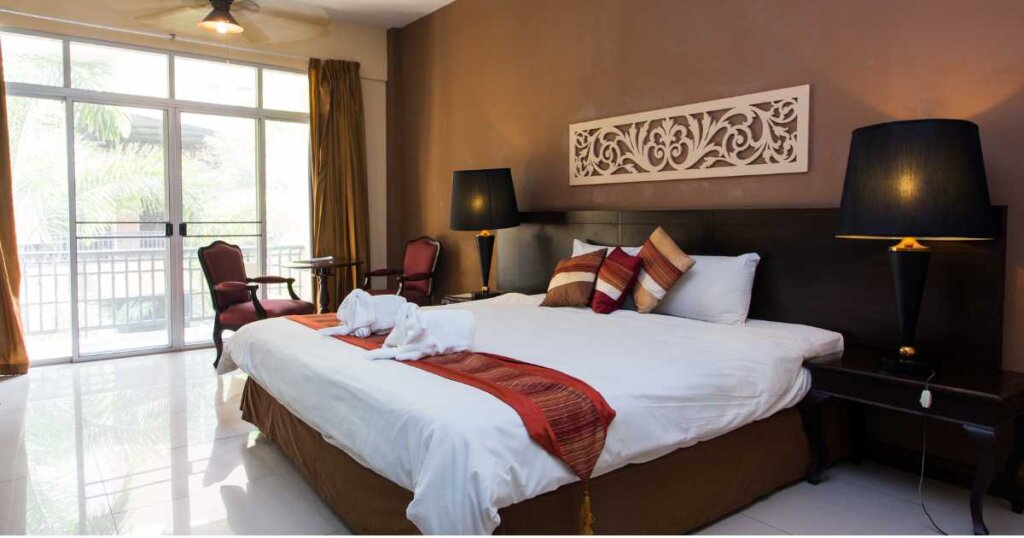
Accommodation is usually the biggest part of your Portugal trip budget. The good news is that Portugal still offers excellent value stays in Western Europe, especially if you choose guesthouses, pensions, or small family-run hotels instead of large international chains.
Where you stay in Portugal matters a lot. Prices change depending on the region, the season, and how close you are to popular attractions. Here’s a realistic, region-by-region look at what to expect in 2026.
Algarve (Southern Portugal — coast & beaches)
The Algarve is Portugal’s most popular region. Because it’s so well known, prices are slightly higher in peak summer months, but still very reasonable compared to most beach destinations in Europe.
In small towns like Tavira, Olhão, Silves, or Monchique: Basic guesthouse or B&B: €45–€75 per night Comfortable 3-star hotel: €75–€130 per night Family apartment (2 bedrooms): €85–€150 per night
In shoulder seasons (spring and fall), the Algarve becomes one of the best-value regions for budget travelers.
Northern Portugal (green mountains & river towns)
The north of Portugal is stunning, peaceful, and often overlooked by tourists — which is exactly why it’s cheaper.
In towns like Braga, Guimarães, Viana do Castelo, Amarante, and smaller Douro Valley villages: Basic guesthouse room: €35–€65 per night Nice local hotel: €65–€105 per night Family apartment: €75–€135 per night
Many guesthouses in the north include breakfast in the price, which saves you even more.
Central Portugal (small towns & countryside)
Central Portugal is full of quiet villages, castles, forests, and historic towns like Tomar, Coimbra, and Castelo Branco. It’s one of the most affordable regions in the entire country.
Small inn or guesthouse: €30–€60 per night Mid-range hotel: €55–€95 per night Family apartment or rural home: €70–€125 per night
Alentejo (wide landscapes & wine region)
Alentejo is a large region of open land, vineyards, olive trees, and peaceful towns like Évora, Beja, and Monsaraz. It’s one of the least crowded areas and also one of the most affordable.
Simple local guesthouse: €35–€70 per night Charming rural hotel: €65–€105 per night Country house or family apartment: €80–€135 per night
The Real Money-Saving Secret — Stay One Town Away
The single best way to lower your accommodation cost is simple: stay one or two towns away from the most famous name on the map.
Instead of staying right in Lagos → stay in Silves or Tavira Instead of the centre of Porto → stay in Amarante or Braga Instead of only Évora → explore smaller villages around it
These quieter towns offer the same beauty at 30–50% lower prices, and they’re often calmer and more authentic too.
What This Means for Your Trip
Solo travelers: easily under €55–€75 per night Couples: great comfort for €65–€105 per night Families: stay well for €85–€150 per night
Accommodation in Portugal, when booked smart, can actually be one of the easiest parts of your budget.
Transport Costs in Portugal (Trains, Buses, Car Rental)
Transportation is easy to control in Portugal. The country has a solid public transport system, and it’s also very comfortable to explore by car. Here’s what you can realistically expect to pay in 2026.
Train prices in Portugal
Portugal’s trains are clean, safe, and very affordable compared to other European countries. Here are realistic one-way train prices in 2026 for popular routes:
Lisbon to Porto: €10–€25 depending on speed and time booked Porto to Braga: €3–€8 Faro to Tavira: €3–€6 Lisbon to Coimbra: €9–€18 Lisbon to Évora: €7–€15
For a trip where you use trains every few days, you might spend around €35–€75 total per week on train travel. That’s a small part of your overall Portugal budget.
Bus prices for shorter distances
Buses are often cheaper than trains and reach many small towns that trains don’t serve.
Short routes (30–60 minutes): €2–€5 Medium routes (1–2 hours): €5–€10 Long routes (2–4 hours): €10–€18
If you’re visiting smaller towns, buses may be your main transport. Even with frequent use, it’s rare to spend more than €5–€8 per day on buses.
Taxi and ride-hailing costs
Taxis in Portugal are much more affordable than in many other European countries.
Short town ride: €4–€8 Medium ride (10–20 minutes): €8–€13 Longer ride (30+ minutes): €15–€28
Apps like Uber and Bolt also operate in many cities and are often cheaper than traditional taxis.
Car rental + fuel + tolls
For U.S. travelers, renting a car is the most flexible way to explore Portugal. In 2026, average car rental prices look like this:
Small economy car: €28–€50 per day Mid-range car: €45–€75 per day Family-size car or SUV: €65–€110 per day
Fuel (gasoline) currently costs around €1.75–€2.10 per liter. Driving moderate distances each day, you might spend around €40–€65 per week on fuel.
Toll roads exist on highways between major cities. Expect roughly €5–€15 per long drive.
For a full 7-day trip, total car costs (rental + fuel + tolls) usually fall between €270 and €480, depending on the car type and how far you travel. Shared between two or more people, this often works out cheaper than trains and taxis combined.
Simple transport cost summary
Mostly trains and buses: €5–€15 per day Mix of transport types: €10–€25 per day Car rental (shared): €35–€65 per day
Activity Costs in Portugal (Families, Couples, Solo)
Portugal is not a “pay for everything” destination. Some of the best experiences are completely free — walking through old streets, relaxing on beaches, exploring viewpoints, and enjoying local markets cost nothing. Here’s a clear look at what different paid experiences usually cost in 2026.
Beaches and outdoor spaces — free
Most beaches in Portugal are completely free to access. Public parks, gardens, river walks, countryside trails, and scenic viewpoints are also free. Entire days of amazing experiences can cost zero euros.
Castles and historical sites — €3 to €10
Portugal’s castles, fortresses, and historic buildings (Óbidos, Tomar, Évora, Silves, Guimarães) typically charge €3 to €10 per person for entry. Some smaller sites are free or ask for a small donation. Many offer discounts for children.
Museums and cultural attractions — €6 to €12
Local museums, maritime museums, tile museums, and cultural centres usually charge €6 to €12 for adults. In smaller towns, prices can be as low as €2 to €5. Kids and teens often get discounts or free entry.
Boat tours and river cruises — €20 to €38
Coastal boat trips, cave tours, or scenic river cruises through vineyard landscapes usually start around €20 and go up to about €38 per person for a 60–90 minute tour.
Kid-friendly activities — €5 to €15
Small zoos, aquarium visits, boat rides, mini trains, and hands-on museums often cost between €5 and €15 per child. Public beaches and parks are free and excellent for families.
Daily activity budget summary
Budget traveler: €0–€10 per day Mid-range traveler: €5–€20 per day Family of four: €10–€45 per day
Full Daily Budget Calculator — Choose Your Style (2026)
Now let’s put everything together into one clear picture you can actually use.
Budget Style Travel
Accommodation: €25–€45 per night Meals: €28–€33 per day Transport: €5–€10 per day Activities: €0–€10 per day
Total daily estimate: €60–€90 per person
Many careful budget travelers can stay under €75 on most days without feeling deprived.
Mid-Range Travel (Most couples and solo travelers)
Accommodation: €65–€105 per night Meals: €38–€48 per day Transport: €10–€20 per day Activities: €10–€20 per day
Total daily estimate: €120–€185 per person
This gives you very good comfort and flexibility while keeping your costs much lower than most other Western European countries.
Family Travel Style (2 adults + 2 children)
Accommodation: €85–€150 per night Meals: €95–€130 per day for the family Transport: €20–€40 per day Activities: €10–€45 per day
Total daily estimate: €210–€300 per family
Portugal remains one of the best-value family destinations in Europe in 2026.
Comfortable / Higher-End Travel
Accommodation: €130–€220+ per night Meals: €55–€75 per day Transport: €20–€45 per day Activities: €20–€55 per day
Total daily estimate: €230–€370+ per person
Even at this level, Portugal is often significantly cheaper than the same standard in France, Italy, or the UK.
Simple way to use this calculator
- Choose your travel style
- Multiply the daily cost by your number of travel days
- Add your flight cost separately
Example: 7-day mid-range trip: €150 × 7 = €1,050 per person (not including flights) 10-day family trip: €260 × 10 = €2,600 for a family of four (not including flights)
Sample Total Trip Costs for 5, 7 and 10 Days
Here are full trip examples based on realistic 2026 spending. These do not include international flights.
5-Day Trip
Solo budget traveler: €80/day × 5 = €400 total Mid-range couple (2 people): €155/person × 2 × 5 = €1,550 total Family of four: €250/day × 5 = €1,250 total
7-Day Trip
Solo budget traveler: €82/day × 7 = €574 total Mid-range couple (2 people): €160/person × 2 × 7 = €2,240 total Family of four: €265/day × 7 = €1,855 total
10-Day Trip
Solo budget traveler: €85/day × 10 = €850 total Mid-range couple (2 people): €170/person × 2 × 10 = €3,400 total Family of four: €280/day × 10 = €2,800 total
When you look at these real numbers, it’s clear why Portugal is such a popular choice. You can travel longer for less money, eat at real restaurants every day, and see beaches, castles, villages, and countryside — all without the price tag of France or Italy.
Cheapest Places to Visit in Portugal in 2026
Not every part of Portugal costs the same. If you want to stretch your budget further, these towns consistently come in cheaper than Lisbon or the main Algarve coast:
Braga — one of the most affordable cities in the north. Guesthouses from €35/night, lunch menus from €8.
Évora — stunning historic town in the Alentejo. Less crowded and lower prices than Lisbon.
Coimbra — university city with great food at student prices. Meals often under €10.
Tavira — quieter Algarve town with noticeably lower prices than Lagos or Albufeira.
Tomar — central Portugal, almost no tourist crowds, very affordable stays.
Staying in these towns instead of Lisbon or Porto can reduce your daily accommodation cost by 30–40% while giving you a more authentic Portugal experience.
Money-Saving Tips for 2026 Travelers

Even though Portugal is already one of the best values in Europe, there are smart ways to lower your costs even further.
Follow the “Menu do Dia” rule for lunch
Look for signs that say “Menu do Dia” wherever locals eat. These set menus usually include a full meal for €8–€13. Doing this four times a week instead of ordering à la carte can save you €20–€30 over the course of a trip.
Stay just outside the most famous areas
Booking accommodation right in the most popular tourist zones is the biggest budget mistake travelers make. By staying one or two towns away, you can lower your nightly cost by 30–50% and still visit the main sights easily.
Travel in the off-season or shoulder season
Summer (July–August) is the most expensive time in Portugal. Traveling in March–May or September–November gets you better prices, fewer crowds, and often surprisingly good weather. Even winter is worth considering for very low prices.
Use trains and buses whenever possible
Compare: a train ticket at €10–€20 versus a car rental + fuel + tolls for the same journey at €40–€70. If your itinerary allows it, public transport saves you significant money while letting you relax and enjoy the scenery.
Choose apartments or guesthouses for longer stays
If you’re staying in one place for three nights or more, apartments and guesthouses offer far better value than hotels. Many include kitchens — even cooking simple breakfasts or dinners a few times saves a meaningful amount over a longer trip.
Use a no-foreign-transaction-fee card
Some credit and debit cards charge an extra 2–3% on every purchase abroad. Before your trip, check your card. If it has foreign transaction fees, switch to one that doesn’t. This is one of the easiest free savings available to U.S. travelers.
Walk more, taxi less
Portugal’s towns are very walkable. Most historic centres, beaches, viewpoints, and markets can be explored entirely on foot. Walking instead of taking short taxis saves money and lets you see more of everyday Portuguese life.
FAQs — Portugal Trip Cost 2026
How expensive is Portugal compared to Spain? Portugal is generally cheaper than Spain across most categories. Meals, local transport, and guesthouses are typically more affordable, which makes your overall daily budget lower — especially for families and budget travelers.
How much is a meal in Portugal in 2026? A simple local lunch (Menu do Dia) costs €8–€13. Dinner in a casual restaurant is around €13–€22. Coffee and pastries are usually under €4, making food one of the best-value parts of any Portugal trip.
How much does a 7-day trip to Portugal cost? A mid-range traveler can expect to spend about €1,100–€1,400 per person for 7 days, not including flights. A family of four typically spends €1,800–€2,200 total based on 2026 estimates.
Is Portugal still affordable in 2026? Yes. While prices have risen modestly since 2023–2024, Portugal remains one of the most affordable Western European countries. A budget traveler can still manage on around €60–€75 per day, and a mid-range traveler on €120–€165. With smart planning, your daily budget stays very manageable.
How much should a family of 4 budget for Portugal? A realistic daily family budget in 2026 is around €210–€300 for two adults and two children. That covers accommodation, food, transport and basic activities — making Portugal one of the friendliest family destinations in Europe for value.
Also Read: Budget Itinerary for Portugal: 7-Day Trip Through Small Towns
Conclusion
Planning a trip is always easier when you know exactly what you’re getting into. With this Portugal trip cost 2026 guide, you now have a clear, honest picture of what your money gets you in one of Europe’s most beautiful and affordable countries.
You’ve seen how meals can be surprisingly cheap, how guesthouses and small hotels still offer great value, and how trains, buses, and even car rentals are much more affordable than in most other European destinations. Whether you travel alone, as a couple, or with your whole family, your daily budget in Portugal can be shaped to match your comfort level.
The real beauty of Portugal is that you don’t have to choose between quality and affordability. You can enjoy fresh food every day, stay in charming places, explore beaches, castles, and villages — and still stick to a very reasonable daily budget. For families, Portugal remains one of the most attractive destinations in Europe, making it easier to give your children a memorable experience without overspending.
Now, instead of guessing or worrying, you can sit down and plan your trip with confidence. Choose your travel style, match it to the numbers in this guide, and start building your itinerary step by step.
Portugal is waiting — and now you know exactly how to make it happen in 2026.