
Portugal is actually one of the easiest Schengen countries to get a visa for. The approval rate sits at around 92–95%, which is among the highest in the Schengen zone. Most applications that get rejected are rejected for reasons that could have been avoided — incomplete documents, insufficient funds on paper, a vague itinerary, or weak evidence of ties to the home country.
If your application was refused, or you’re applying for the first time and want to get it right, this guide walks through every significant reason Portuguese consular authorities reject Schengen visa applications in 2026 — with practical advice on how to fix each one.
Important note on agency names: SEF (the Foreigners and Borders Service) was replaced by AIMA (Agency for Integration, Migrations, and Asylum) in October 2023. If you see references to SEF elsewhere, the equivalent authority is now AIMA. Short-stay tourist visas are still processed through Portuguese consulates and embassies worldwide.
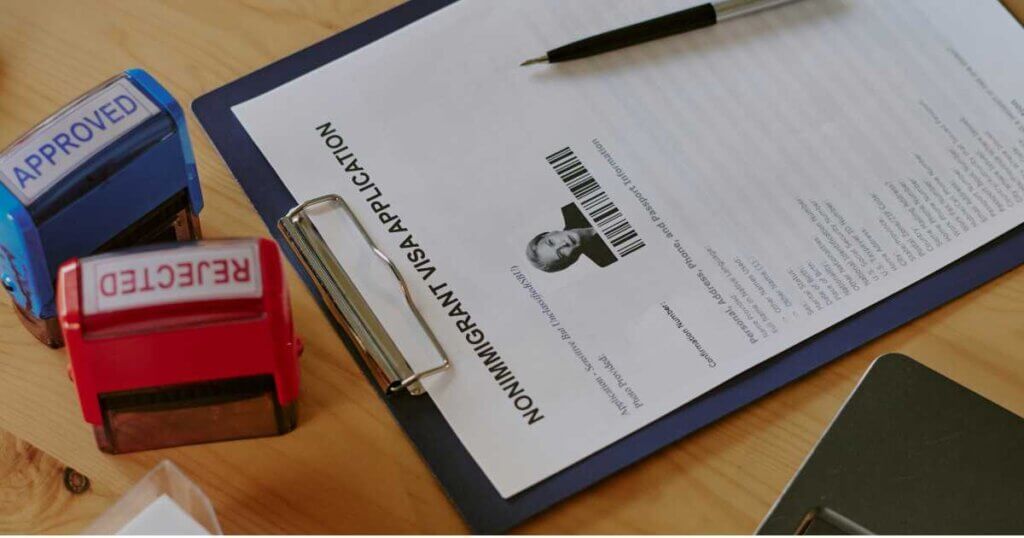
Quick Overview: Main Rejection Categories
| Rejection Reason | How Common | Key Issue |
|---|---|---|
| Insufficient financial means | Very common | Bank balance too low or inconsistent |
| Lack of intent to return home | Very common | Weak ties to home country |
| False or misleading information | Common | Document fraud or contradictions |
| Travel purpose not justified | Common | Vague itinerary, missing bookings |
| Invalid travel document | Moderate | Passport expiring too soon or damaged |
| Incomplete application | Moderate | Missing documents, unsigned forms |
| Insufficient travel insurance | Moderate | Coverage below €30,000 or wrong dates |
| Previous immigration violations | Lower frequency, high impact | Schengen overstays or visa fraud |
| Security concerns | Rare but severe | SIS database flags |
1. Insufficient Financial Means — The Most Common Rejection
This is the single most frequent reason for Schengen visa rejections, including Portugal. Consular officers need to see that you can genuinely fund your entire stay without working in Portugal.
Portugal’s financial requirement for 2026:
- €75 per day of intended stay, or a minimum of €1,500 — whichever is higher
- Example: A 10-day trip requires at least €750 demonstrated; a 14-day trip requires at least €1,050
- This is lower than many other Schengen countries (France requires €65/day, Germany is higher), which is one reason Portugal has strong approval rates
What triggers a rejection on finances:
Bank balance too low on the day of application. The balance needs to cover your entire trip at the daily rate. Officers check the most recent statement, not an average.
Sudden large deposit shortly before applying. A significant transfer into your account 1–4 weeks before submission is a classic red flag. It signals borrowed money, not genuine savings. Officers are trained to spot this — the deposit pattern looks nothing like regular income.
Irregular or unexplained deposits. If your statements show inconsistent, unexplained amounts going in and out without a clear income source, this raises doubts about the legitimacy of your funds.
No regular income evidence. Bank balance alone is not always enough. You need to show where the money comes from — employment letters, payslips, business accounts, or pension documentation.
Self-employed applicants face extra scrutiny. Without payslips from an employer, you need business registration documents, tax returns for the past 1–2 years, and a business bank account showing regular turnover. Income that cannot be clearly verified is a common rejection trigger.
How to fix it:
- Build a consistent balance over 3–6 months before applying — don’t try to top it up last minute
- Show more than the minimum: €1,500+ above the daily requirement gives officers comfort
- Submit 6 months of bank statements, not just 3
- Pair statements with income proof: payslips, employment letter, or tax returns
- If genuinely sponsored by someone else, provide a formal sponsorship letter plus their financial documents and proof of relationship
2. Lack of Intent to Return Home — Almost As Common
Portuguese consular officers must believe you will leave the Schengen Area before your visa expires. If they have doubts, they will reject. This is the second most common reason for refusals and the hardest one for many applicants to address because it’s partly about perception.
What raises doubts about intent to return:
Unemployment or recent job change. If you have no job to return to, or started a new job less than 6 months ago, the officer may question why you would leave Europe. A job offer letter or employer’s confirmation of your return date significantly helps.
No property, assets, or lease in your home country. Owning or renting a home, owning a car, having bank accounts and investments — all of these signal that you have reasons to go back. No assets in your home country is a genuine red flag.
All close family already in a Schengen country. If your spouse, children, or parents are living in Europe and you’re applying alone, officers may wonder if you plan to join them permanently.
Previous visa overstays anywhere. Even one documented overstay in any country — not just Schengen — damages your application significantly. It goes on record and consular officers will see it.
Young, single, unemployed applicants from high-risk nationalities. This profile receives heightened scrutiny everywhere in Schengen. It’s not fair, but it’s the reality. If this describes you, your documentation needs to be exceptionally strong.
How to fix it:
- Include an employment letter confirming your position, salary, and approved leave dates — ideally with a statement that you are expected back at work
- If a student, get a letter from your institution confirming enrolment continues after your trip
- Show proof of assets: property deeds, vehicle registration, lease agreements
- Document family responsibilities: dependents, elderly parents you care for
- Write a clear, honest cover letter explaining your trip purpose and your ties at home
3. False or Misleading Information — Automatic Rejection
Submitting fraudulent documents or providing contradictory information is taken extremely seriously. Detection results in immediate rejection and can trigger a visa ban across all Schengen countries.
Most common falsification attempts:
- Fake employment letters or payslips from non-existent companies
- Altered bank statements with boosted balances
- Forged company stamps or letterheads
- Fake invitation letters
- Tampered property documents
Consequences of detected fraud:
- Immediate visa rejection
- Entry into the Schengen Information System (SIS) database
- Visa ban of 1–5 years across all 29 Schengen countries
- Possible criminal prosecution in the issuing country
- Permanent difficulty obtaining future Schengen visas
Consular officers routinely verify documents — they call employers, check company registrations, and cross-reference statements with stated income levels. Inconsistencies are almost always caught.
Contradictions that cause rejections without outright fraud:
- Hotel booking dates that don’t match flight dates on the application
- Employment letter dates inconsistent with payslip history
- Financial figures that don’t match claimed income level
- Purpose of visit that changes during a consular interview
- Itinerary that doesn’t match the stated reason for travel
Even an honest mistake that creates a contradiction can trigger a rejection. Double-check every date and figure across all your documents before submitting.
4. Travel Purpose Not Sufficiently Justified
Your application needs to tell a clear, believable story about why you’re going to Portugal, what you’ll be doing, where you’ll be staying, and how long you’ll be there. Vague or incomplete answers to these questions are common rejection triggers.
Accommodation problems:
- No hotel reservations covering your full stay
- Confirmation from sources that can’t be verified
- Addresses that don’t correspond to real properties
- Missing or incomplete invitation letter from a host if staying with someone
Unclear or implausible itinerary:
- Generic travel plans with no specific destinations or activities
- Duration of stay that doesn’t match the stated purpose (10-day visa request for a 2-day conference)
- Requesting a longer visa than the trip requires without explanation
- Multiple short visits in a short period — this raises visa shopping suspicions
Business visit weaknesses:
- No invitation letter from a Portuguese company
- Inviting company cannot be verified or doesn’t appear to exist
- No proof of an existing business relationship between your company and the Portuguese one
- Conference or event not verifiable
Family visit problems:
- Host’s legal status in Portugal not documented
- Host can’t prove residence with utility bills or lease
- Relationship not proven with birth certificates or marriage certificates
How to fix it:
- Book refundable hotel reservations for your entire stay before applying
- Create a specific day-by-day itinerary — not a paragraph, but actual dates and places
- For business visits, get a formal invitation on company letterhead with registration number
- For family visits, have your host prepare a proper invitation letter plus copies of their residence permit and proof of address
5. Travel Document Problems
These are technical failures that lead to automatic rejection regardless of everything else being in order.
Passport validity: Schengen rules require your passport to be valid for at least 3 months beyond your planned departure date from the Schengen Area.
Example: If your trip ends on 30 September 2026, your passport must be valid until at least 31 December 2026. If it expires on 1 November 2026, your application will be rejected — even with only one day of shortfall.
Passport age: Your passport must have been issued within the last 10 years, even if the expiry date hasn’t passed yet.
Physical condition:
- Water damage, torn pages, separated pages
- Mutilated or altered information
- Illegible data
- Damaged biometric chip (in biometric passports)
- Fewer than 2 blank pages available for the visa sticker
Previous visa patterns in your passport:
- Multiple expired Schengen visas with no corresponding entry or exit stamps (suggests overstaying)
- Voided or cancelled visas without explanation
- Travel patterns that don’t match visa usage history
Fix: Renew your passport well before applying. Don’t wait until it’s close to the validity threshold — processing your application and then traveling takes time, and cutting it close is a risk not worth taking.
6. Incomplete Application Submissions
One missing document can get your application returned or rejected. Portuguese consular offices generally do not chase applicants for missing items — they simply refuse.
Most commonly missing items:
- Travel insurance certificate (or insufficient coverage)
- Bank statements for fewer than the required months
- Return flight booking
- Accommodation confirmation for the full stay
- Employment verification letter
- Signed application form
Photo requirements (strictly enforced):
- Size: 35mm × 45mm
- Taken within the last 6 months
- White or light grey background
- Face clearly visible, no shadows
- Must meet ICAO biometric photo standards
Document quality:
- Photocopies must be clear and legible
- All documents not in English or Portuguese must be professionally translated
- Bank statements must carry official bank stamps or digital verification codes
- Missing stamps on documents that require them is an automatic problem
How to fix it:
- Use the official Portuguese consulate checklist for your nationality — requirements can vary slightly by consulate location
- Submit original documents plus clear photocopies of everything
- Don’t leave any field blank on the application form — write “not applicable” if a section doesn’t apply to you
7. Travel Insurance Problems
Travel insurance is mandatory for a Schengen visa, and getting it wrong is surprisingly common.
Current requirements for 2026:
- Minimum coverage: €30,000
- Must cover: Medical expenses, emergency hospitalisation, repatriation to home country
- Geographic scope: Must be valid for the entire Schengen Area, not just Portugal
- Validity period: Must cover your full planned stay, including arrival and departure dates — not a day short
Common insurance rejection triggers:
- Policy with coverage below €30,000
- Insurance valid only for Portugal, not the full Schengen Area
- Coverage start date after your planned arrival date
- Coverage end date before your planned departure date
- Provider not recognised by Portuguese authorities
- Policy exclusions that undermine the minimum requirements
Practical advice: Buy insurance specifically labelled as “Schengen visa travel insurance” from a recognised provider. The certificate must clearly state the coverage amount, the geographic scope (Schengen Area), and the exact validity dates matching your travel dates.
8. Previous Immigration Violations
A history of immigration violations — even in other countries — is taken seriously and can lead to rejection even when all other documents are strong.
Schengen overstay impact:
- Any documented overstay is recorded in the Schengen Information System (SIS)
- Officers can see this when checking your application
Approximate bans by overstay duration:
- Short overstay (1–30 days): 1–2 year entry restriction
- Medium overstay (31–90 days): 2–3 year entry restriction
- Long overstay (90+ days): 3–5 year entry restriction
- Repeated overstays: Longer bans and near-certain future rejection
Other violations that affect applications:
- Previous deportations from any country
- Unauthorised employment during a tourist visit
- Using a tourist visa for business activities
- Previous visa fraud in any jurisdiction
- Multiple previous Schengen rejections across different countries
If you have a history of violations: Full disclosure is required on the application form. Hiding violations that are subsequently discovered during background checks results in immediate rejection and potential fraud classification. An honest explanation letter acknowledging the past situation, demonstrating that circumstances have changed, and providing evidence of compliance with any bans gives you the best chance of a fair assessment.
9. Consular Interview Red Flags
Not all Portuguese consulates require interviews, but where they do, inconsistent answers can undo an otherwise strong application.
Knowledge gaps that raise concerns:
- Unable to answer basic questions about your planned itinerary
- Doesn’t know the names of destinations you claim to be visiting
- Cannot explain your travel purpose convincingly
- Contradicts information in your written application
Behaviour patterns that concern officers:
- Overly rehearsed or scripted answers
- Inability to provide specific details when asked follow-up questions
- Nervousness combined with vague responses
- Changing your account when questioned
Practical advice: Know your own application thoroughly before an interview. You should be able to explain your itinerary, accommodation, travel companions, and the purpose of each part of your trip without hesitation or notes.
Before You Apply: Honest Self-Assessment
Go through this checklist before submitting. If you have weaknesses in any area, address them before applying — not after rejection.
Financial:
- Is my bank balance at least €1,500, or €75 × number of travel days (whichever is higher)?
- Has my balance been consistent for the past 3–6 months with no suspicious large deposits?
- Do I have clear proof of where my income comes from?
- If self-employed, do I have business registration, tax returns, and business account statements?
Ties to home country:
- Do I have a job with an employer confirming I’m expected back?
- Do I have property, a lease, a vehicle, or other assets at home?
- Are my immediate family members in my home country (not in Europe)?
- Do I have ongoing commitments — mortgage, business, dependents — that require my return?
Documentation:
- Do I have confirmed hotel bookings or host documentation for every night of my stay?
- Is my itinerary specific (dates, places, activities) rather than general?
- Does my travel insurance meet all requirements: €30,000 minimum, full Schengen coverage, exact dates?
- Is my passport valid for 3+ months beyond my return date, issued within the last 10 years, with 2+ blank pages?
- Have I checked every document for internal consistency — dates, names, figures?
History:
- Do I have any previous Schengen overstays or violations that I need to disclose?
- Have I had visa rejections from other Schengen countries that I need to mention?
After a Rejection: What to Do
Read the rejection letter carefully. It will cite a specific Article 32 legal ground. The most common are:
- Article 32(1)(b): Purpose and conditions of stay not justified
- Article 32(1)(c): Insufficient financial means
- Article 32(1)(f): Doubts about intention to leave before visa expiry
You can appeal or reapply — but not both at the same time.
Appealing: Appeals must be submitted in writing to the same consulate that issued the rejection, usually within 15–30 days (exact deadline is stated in your rejection letter). Include new supporting evidence that directly addresses the stated rejection reason. No additional fee in most cases. Processing typically takes 30–90 days.
Reapplying: There is no mandatory waiting period — you can submit a new application immediately. A new application fee (€90 for Schengen visa as of 2026) is required. Address every specific concern from the rejection reason before resubmitting. Simply submitting the same documents again without changes will produce the same result.
Which to choose: If you have strong new evidence that directly contradicts the reason for rejection, appeal. If you need to gather significantly different documentation (stronger finances, a new job letter, better itinerary), reapply once that documentation is genuinely ready.
FAQs — Portugal Visa Rejections
How much money do I need to show for a Portugal Schengen visa in 2026? €75 per day of intended stay, with a minimum of €1,500. This should be available in your bank account and supported by 3–6 months of statements showing consistent funds, not a one-time deposit.
Will one previous rejection affect my next application? Yes, you must declare previous rejections. It doesn’t automatically disqualify you, but it means your next application needs to clearly address whatever caused the first one to fail.
Does Portugal have a lower or higher approval rate than other Schengen countries? Higher. Portugal approves approximately 92–95% of Schengen visa applications — among the best rates in the zone. This makes it a good choice for first-time Schengen applicants or those from nationalities with more difficult approval histories elsewhere.
Is SEF still the immigration authority in Portugal? No. SEF was replaced by AIMA (Agency for Integration, Migrations, and Asylum) in October 2023. Short-stay tourist visas are still handled through Portuguese consulates and embassies, but any residence permit queries now go through AIMA.
Can I reapply immediately after rejection? Yes. There is no mandatory waiting period. But reapplying with the same documents and same weaknesses will produce the same rejection. Only reapply once you’ve genuinely addressed the reason for refusal.
What is the Schengen visa fee in 2026? €90 for adults, €45 for children aged 6–11. Children under 6 are free. This fee is non-refundable regardless of the outcome.
Conclusion
Most Portugal visa rejections are preventable. The pattern is almost always one of three things: insufficient or inconsistent financial documentation, weak evidence of ties to home country, or an incomplete/vague application with missing documents or a thin itinerary.
Portugal actively encourages tourism and has one of the highest Schengen approval rates in Europe. If your application is solid — clear finances, a real itinerary, verified accommodation, and genuine reasons to return home — your chances of approval are very good.
Take the time to address every point in the checklist above before you apply. A rejected visa means losing the €90 fee, losing the waiting time, and potentially losing your travel dates. It’s worth spending an extra week getting the application right.
More planning resources:
Portugal Travel Guide for First Time Visitors
Portugal Schengen Visa Application Process: Step-by-Step Guide
Portugal Visa Processing Times: Duration by Nationality and Season
Is Portugal Worth Visiting in 2026? An Honest Guide for First-Timers